Updated November 24, 2026. Reviewed by Henrik Andersson, founder of Nordic Lifting
What are the most important weight lifting techniques for beginners? Learn to brace your core, keep a neutral spine, control the lowering phase and move through a full, comfortable range. Then build your program around five movement patterns: squat, hinge, push, pull and carry. This guide explains each technique, how heavy to start, how many sets and reps to do and how to add weight safely.

Quick answer: Start with a weight you can lift for 8 to 12 controlled reps with 2 or 3 reps left in reserve. Do 2 or 3 sets of a squat, hinge, push, pull and carry, 2 or 3 days a week. Brace before each rep, lower the weight under control and keep a neutral spine. When you can beat your target reps by 1 or 2, add about 2 to 10% more weight.
Key takeaways
- Brace your core and keep a neutral spine on every rep.
- Use 8 to 12 rep weights while you learn.
- Train the squat, hinge, push, pull and carry patterns.
- Add 2 to 10% weight once you beat your rep target by 1 or 2 reps.
The Nordic Lifting Take
Beginners worry about the perfect program. The program matters less than learning to brace, owning the bottom of every rep and adding a little weight every week. Film your sets from the side once a week; it shows you more than any cue.
Henrik Andersson, founder of Nordic Lifting
By the numbers
- The ACSM recommends loads of an 8 to 12 rep maximum for novices, training 2 to 3 days a week (ACSM 2009).
- The same position stand recommends a 2 to 10% load increase when you can do one or two reps over your target (ACSM 2009).
- Only 31.0% of US adults met the muscle-strengthening guideline in 2020 (CDC NCHS Data Brief 443).
Journalists and writers may use these figures if they credit Nordic Lifting with a backlink to this page. Questions: henrik@nordiclifting.com
What are the basic weight lifting techniques?
Four techniques carry over to every lift.
- Bracing: breathe in through your belly, then tighten your midsection as if someone were about to poke you. Hold it through the hardest part of the rep.
- Neutral spine: keep your back in its natural position, not rounded and not over-arched.
- Controlled lowering: take about 2 seconds on the way down. Do not drop into the bottom.
- Full, comfortable range: go as deep as you can while keeping good position.
Which exercises should beginners learn first?
One exercise for each of the five movement patterns.
| Pattern | Beginner exercise | Key technique cue |
|---|---|---|
| Squat | Goblet squat | Sit between your hips, chest up, heels down |
| Hinge | Romanian deadlift with dumbbells | Push your hips back, keep the weights close |
| Push | Dumbbell bench press or push-up | Elbows about 45 degrees from your body |
| Pull | One-arm dumbbell row | Pull your elbow toward your hip |
| Carry | Farmer's carry | Stand tall, shoulders down, walk slowly |

How much weight should a beginner lift?
Pick a weight you can lift for your target reps with 2 or 3 reps left. If you are aiming for 10 reps, choose a weight you could do about 12 or 13 times. The last two reps should feel hard but your form should not change. Our guide on how much weight to lift has more detail.
How many sets, reps and rest periods?
2 or 3 sets of 8 to 12 reps, with 1 to 2 minutes of rest. Rest a little longer, around 2 to 3 minutes, on heavy squats and deadlifts. Train each muscle group 2 or 3 times a week with at least a day between sessions for the same muscles.
How do you progress safely?
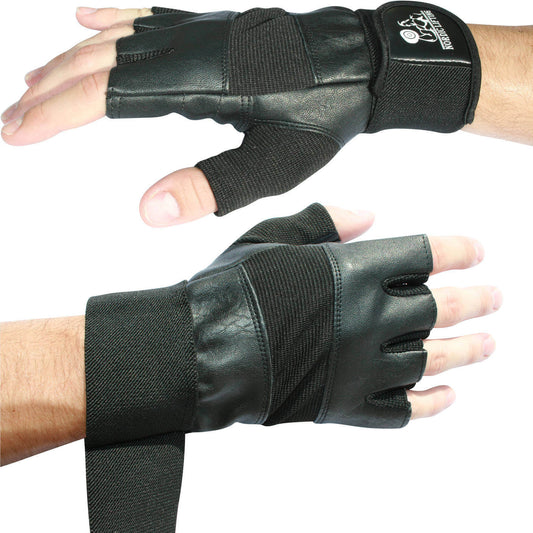
Add reps first, then weight. When you can do 1 or 2 reps more than your target on every set, add about 2 to 10%. Smaller jumps work better for upper-body lifts. As you get stronger, gear can help: weightlifting wrist wraps support your wrists on heavy pressing, but learn the lifts without gear first.

Nordic Lifting Weightlifting Wrist Wraps, 14"
4.4 (271 reviews)
Short, stiff wraps that support your wrists on heavy presses.
From $19.58
Shop 14 inch wrist wrapsWhat are common beginner technique mistakes?
Going too heavy too soon is the big one. Others include bouncing out of the bottom, holding your breath without bracing, letting the knees cave in on squats and lifting with the arms on rows. Read common weightlifting injuries and how to avoid them before your first heavy block.
Frequently asked questions
What is the best lifting technique for beginners?
Bracing your core and controlling the lowering phase. Both carry over to every exercise.
How many days a week should a beginner lift?
Two or three days a week is enough to start.
How many reps should a beginner do?
About 8 to 12 reps per set, with 2 or 3 reps left in reserve.
Should beginners use machines or free weights?
Both work. Free weights like dumbbells and kettlebells teach balance and control; machines are easy to learn.
When should I increase the weight?
When you can do 1 or 2 reps more than your target on every set. Add about 2 to 10%.
Sources
- American College of Sports Medicine 2009, Med Sci Sports Exerc, progression models in resistance training (PubMed 19204579)
- CDC NCHS Data Brief No. 443, Physical Activity Among Adults Aged 18 and Over: United States, 2020
- Physical Activity Guidelines for Americans, 2nd edition: Top 10 Things to Know (ODPHP)