Updated November 21, 2026 by Henrik Andersson
How you hold the bar changes which muscles work, how much you can lift and how safe the lift feels. Most lifters only need a few grips: overhand for most pressing and pulling, underhand for some rows and curls, and either mixed or hook grip when deadlifts get heavy. This guide explains each grip type, which lifts use it and when lifting straps are worth it.

Quick answer: The main barbell grips are overhand (pronated), underhand (supinated), mixed (one hand over, one under), hook grip (thumb trapped under the fingers), false or thumbless grip, and neutral grip on specialty bars or dumbbells. Overhand is the default for most lifts. Mixed and hook grips help on heavy deadlifts. Use a full thumb-around grip for the bench press.
Key takeaways
- Overhand grip is the default for presses, rows, pull-ups and lighter deadlifts.
- Mixed and hook grips stop the bar from rolling out of your hands on heavy pulls.
- Always wrap your thumb around the bar on the bench press. IPF rules require it.
- Lifting straps help when grip gives out before your back and legs.
The Nordic Lifting Take
Train your grip with an overhand hold for as long as you can, then use straps for the sets where grip is the only thing holding you back. Wrist wraps were the first product I designed, and my view on support gear has stayed the same: it should let you train the target muscle, not replace the basics you can still build.
Henrik Andersson, founder of Nordic Lifting
By the numbers
- IPF bench press rules require hands, thumbs and fingers to fully grip the bar with a thumbs-around grip, and hand spacing may not exceed 81 cm between the forefingers (IPF Technical Rulebook 2026).
- The IPF bans the reverse (underhand) grip on the bench press (IPF Technical Rulebook 2026).
- The 2024 Adult Compendium lists squat and deadlift training at 5.0 METs (Adult Compendium, Conditioning Exercise).
Journalists and writers may use these figures if they credit Nordic Lifting with a backlink to this page. Questions: henrik@nordiclifting.com
What are the main types of barbell grip?
Most lifting uses six grips: overhand, underhand, mixed, hook, false and neutral.
| Grip | How it works | Best for |
|---|---|---|
| Overhand (pronated) | Palms face you or down, thumbs wrapped | Bench, overhead press, rows, pull-ups, lighter deadlifts |
| Underhand (supinated) | Palms face away or up | Barbell curls, chin-ups, some rows |
| Mixed (alternating) | One palm over, one under | Heavy deadlifts, rack pulls |
| Hook grip | Thumb wrapped first, fingers over the thumb | Olympic lifts, heavy deadlifts |
| False (thumbless) | Thumb on the same side as the fingers | Some advanced pressing, not advised for bench |
| Neutral | Palms face each other | Dumbbells, trap bar, specialty bars |

When should you use overhand grip?
Use overhand grip for most barbell lifts and for deadlifts until grip starts to limit you. It keeps both shoulders in the same position and builds grip strength. For pressing, wrap the thumb, keep the bar low in the palm over the forearm bones, and squeeze. Holding a double overhand grip on warm-up deadlifts is an easy way to train your grip without adding extra work.
Is mixed grip or hook grip better for deadlifts?
Both are good, and the best one is the grip you can hold safely and repeat. Mixed grip is easy to learn and very secure, but it loads your arms unevenly, so switch which hand is under from set to set. Keep the underhand arm straight to protect the biceps. Hook grip keeps both hands overhand, which feels even, but it is uncomfortable at first. Our guide on making the hook grip less painful helps with that.
How does grip width change a lift?
A wider grip shortens the range of motion and shifts work toward the chest or upper back, while a narrower grip adds triceps or biceps work. On the bench press, a medium grip with forearms close to vertical at the bottom suits most people. A close grip trains more triceps. On rows and pulldowns, a wider grip shifts work to the upper back, while a closer grip brings in more of the lats and biceps. In powerlifting, the bench grip cannot be wider than the 81 cm marks on the bar.
When should you use lifting straps?
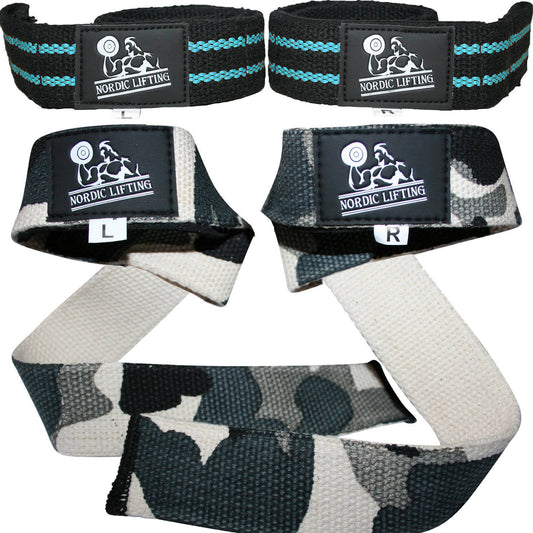
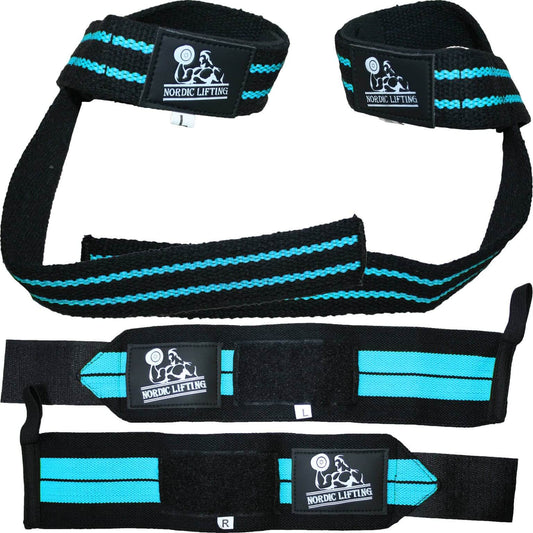
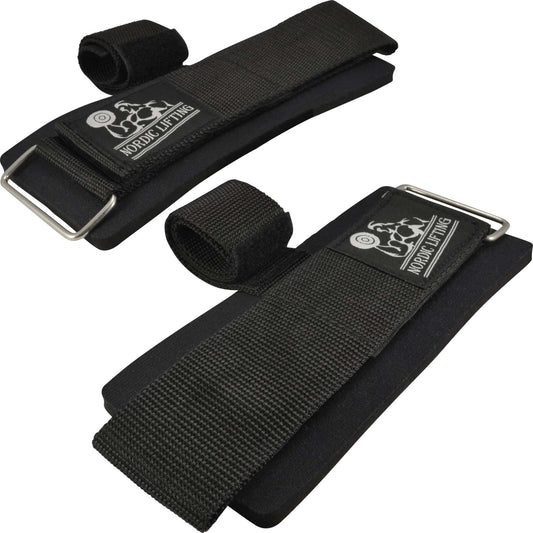
Use lifting straps when your grip fails before the muscle you are training. Good examples are heavy rows, rack pulls, shrugs and high-rep Romanian deadlifts. Keep some sets strapless so your grip keeps improving. Straps are not allowed in most powerlifting competitions, so practice without them before a meet. Our guide on how to use lifting straps shows how to wrap them, and how to choose lifting straps covers length and material.
Here is a lifter reviewing our straps on rack pulls. He says he was sent a free pair and explains why the foam padding made them more comfortable for heavy pulls.


4.6 (150 reviews)
Straps for heavy rows, shrugs and deadlifts when grip gives out first.
$19.58
Shop lifting strapsFrequently asked questions
What is the strongest grip for deadlifts?
Mixed grip and hook grip are the most secure. Many lifters also use straps in training.
Is a thumbless grip safe on the bench press?
It is risky because the bar can roll out of your hands. IPF rules require a thumbs-around grip.
What is a pronated grip?
An overhand grip, with palms facing you when holding a bar in front of your legs.
Does mixed grip cause imbalances?
It loads your arms unevenly, so switch which hand faces up from set to set.
Are lifting straps cheating?
No. They let you train your back and legs when grip limits you. Keep some sets strapless to build grip.
Sources
- IPF Technical Rulebook 2026 (effective 1 March 2026)
- 2024 Adult Compendium of Physical Activities, Conditioning Exercise