Updated November 21, 2026 by Henrik Andersson
Do you need a spotter? For heavy bench presses, squats and any set taken close to failure, yes, or at least a solid safety setup. A spotter is there to help you finish or rack a rep you cannot complete, so a missed lift does not end with a bar on your chest. Here is when to ask for a spot, how to give one properly and how to train safely when nobody is around.

Quick answer: You need a spotter when you bench press, squat or overhead press heavy weights or take sets close to failure. For the bench, the spotter stands behind your head and helps lift the bar back to the rack if you stall. For squats, use a spotter behind you or set safety bars in a rack. Agree on the number of reps and when to help before the set starts.
Key takeaways
- Heavy bench press is the lift that most needs a spotter or safety arms.
- In US emergency department data, 65.5% of weight training injuries came from weights dropping on the person.
- Agree on reps, the lift-off and the signal for help before every spotted set.
- Training alone? Use a power rack with safety bars set just below your lowest point.
The Nordic Lifting Take
If you are going heavy on the bench, get a spot or set the safeties every time. After more than 20 years of lifting, my view on this has not changed. Ego is what puts people under a bar with nobody watching, and a missed rep should be boring, not dangerous.
Henrik Andersson, founder of Nordic Lifting
By the numbers
- An estimated 970,801 weight training injuries were treated in US emergency departments from 1990 to 2007 (Kerr et al. 2010).
- In those cases, the most common mechanism was weights dropping on the person (65.5%), and 90.4% involved free weights (Kerr et al. 2010).
- The upper trunk (25.3%) and lower trunk (19.7%) were the most often injured body parts (Kerr et al. 2010).
- IPF powerlifting rules require at least two and no more than five spotter/loaders on the platform during competition lifts (IPF Technical Rulebook 2026).
Journalists and writers may use these figures if they credit Nordic Lifting with a backlink to this page. Questions: henrik@nordiclifting.com
When do you need a spotter?
Use a spotter whenever a failed rep would leave a heavy bar on top of you. That includes:
- Heavy bench press, incline press and close-grip press.
- Heavy back squats, unless you squat in a rack with safety bars.
- Any set where you plan to go to or very close to failure.
- New maxes or rep records.
- Heavy dumbbell presses, where help getting the bells into position is useful.
Lifts where you can simply drop the weight, like deadlifts, do not need a spotter in the same way.

Which lifts need a spotter most?
The bench press needs a spotter most, followed by the squat and overhead press.
| Lift | Spotter needed? | Safer setup if alone |
|---|---|---|
| Bench press | Yes, for heavy or hard sets | Bench inside a rack with safety arms at chest height |
| Back squat | Yes, or use safeties | Rack with safety bars just below the bottom position |
| Overhead press | Helpful for heavy sets | Press inside a rack, know how to dump the bar forward |
| Dumbbell press | Helpful for heavy weights | Leave a rep in reserve and lower the bells to the floor |
| Deadlift | No | Start and finish on the floor, no spot needed |
How do you spot someone on the bench press?
Stand behind the lifter's head, keep your hands close to the bar and only help when the bar stops moving up. Steps:
- Agree on the number of reps and whether they want help with the lift-off.
- Stand close, feet shoulder width apart, knees soft, back flat.
- Use an alternating grip just inside the lifter's hands for the lift-off, then let go smoothly.
- Follow the bar with your hands a few inches below it.
- If the bar stalls, lift with your legs and guide it back to the rack together.
Do not touch the bar while it is still moving up. That takes the rep away from the lifter. Our bench press tips cover setup and technique.

How do you spot a squat safely?
Spot a squat from behind with your arms around the lifter's torso, or use two side spotters on the bar for very heavy sets. The single spotter stands close behind, follows the lifter down, and helps by lifting under the arms or chest if they stall. Never pull back on the bar. In most gyms, a rack with safety bars set just below the bottom of your squat is the more reliable option. If you squat heavy often, 7mm knee sleeves are a common piece of gear for warmth and a snug feel, but they do not replace a safe setup.
How can you lift safely without a spotter?
Set safety bars, leave a rep in reserve and know how to bail. Training alone is common, so plan for it:
- Bench and squat inside a power rack with safeties at the right height.
- Do not use clips on the bench when lifting alone, so you can tilt plates off if stuck.
- Stop sets one or two reps before failure.
- Ask someone nearby for a spot. Most lifters are glad to help.
- Choose dumbbells or machines for hard sets when no rack is free.
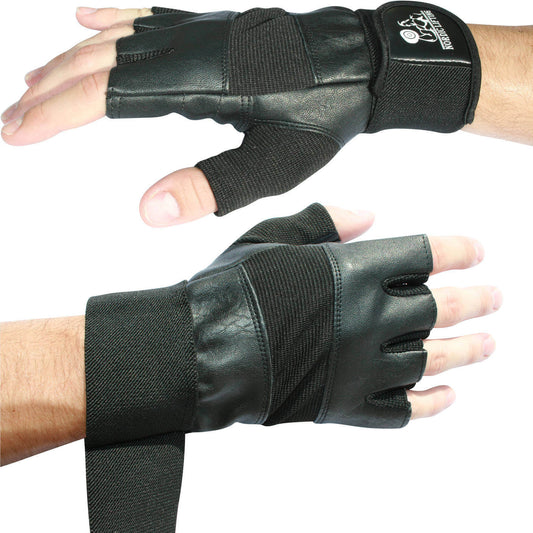
Wrist wraps can help keep your wrists stacked on heavy pressing, but they are support gear, not a safety system.
Frequently asked questions
Do you need a spotter for bench press?
For heavy or hard sets, yes. If you are alone, bench inside a rack with safety arms.
Do you need a spotter for squats?
Use a spotter or squat in a rack with safety bars set just below your lowest position.
What should you tell your spotter?
How many reps you are going for, whether you want a lift-off and when they should help.
Where should a spotter stand on bench press?
Behind the lifter's head, close to the bar, with hands ready but not touching while the bar moves.
Can you deadlift without a spotter?
Yes. The bar starts and ends on the floor, so a spotter is not needed.
Sources
- Kerr et al. 2010, Am J Sports Med, weight training injuries in US emergency departments 1990 to 2007 (PubMed 20139328)
- IPF Technical Rulebook 2026 (effective 1 March 2026)