
Updated November 15, 2026
Women weightlifters are no longer the exception in the free-weight area. Women have competed in Olympic weightlifting since Sydney 2000, and at Paris 2024 the sport had as many women on the platform as men. This feature, first published in March 2023, shares the stories six US lifters and coaches told us about starting out, being underestimated and finding their footing, plus a short history and practical tips for women who are new to lifting.
Quick answer: Women have lifted at the Olympic Games since 2000, when Tara Nott of the United States became the first female Olympic weightlifting champion. The six women in this feature, from coaches to a nurse who built a home gym, all give the same advice to beginners: learn the basics, ask for help, expect to make mistakes and keep showing up.
Key takeaways
- Women’s weightlifting joined the Olympic program at Sydney 2000.
- Paris 2024 had 60 male and 60 female weightlifters, according to the IWF.
- Every woman in this feature started as a beginner who felt out of place at first.
- Their shared advice: learn proper form, ask questions and do not let anyone tell you that you cannot lift.
The Nordic Lifting Take
Strength training has never belonged only to men. I have trained for more than 20 years and the lifters I respect most are the ones who keep learning, and these six women say exactly that. If you are new, pick a simple plan, learn the lifts light and give yourself time.
Henrik Andersson, founder of Nordic Lifting
By the numbers
- Women first competed in Olympic weightlifting on September 17, 2000, in the 48 kg category at Sydney, and Tara Nott (USA) became the first female Olympic weightlifting champion (IWF).
- At Sydney 2000, 85 female athletes from 47 countries lifted across 7 women’s weight classes (IWF).
- At Paris 2024, weightlifting had 60 male and 60 female lifters, and Olivia Reeves became the second US woman to win Olympic weightlifting gold (IWF).
- In 2020, 20.4% of US women met the federal guidelines for both aerobic and muscle-strengthening activity, compared with 28.3% of men (CDC NCHS Data Brief 443).
More data: see our US strength training statistics page. For women's data by age and education, see our US women strength training statistics.
Journalists and writers may use any of these statistics as long as they credit Nordic Lifting with a backlink to this page. Questions can go to our PR email, henrik@nordiclifting.com.
How did women break into competitive weightlifting?
For more than a century, Olympic weightlifting was a men-only event. Women could compete at world and continental championships, but the Olympic platform stayed closed until Sydney 2000. That year Tara Nott of the United States took gold in the 48 kg class after the original winner was disqualified, which made her the first woman ever to win Olympic weightlifting gold. It was also the first US weightlifting gold since 1960.
The program has grown since then. By Paris 2024 the sport had equal numbers of men and women, and Olivia Reeves of the United States won gold, joining Nott as the only American women with an Olympic title in the sport. Powerlifting, CrossFit-style training and everyday strength training have seen the same shift, with far more women lifting in commercial and home gyms than a generation ago.
| Year | Milestone |
|---|---|
| 2000 | Women lift at the Olympics for the first time, in Sydney. Tara Nott (USA) wins the first women’s gold at 48 kg. |
| 2000 | 85 women from 47 countries compete across 7 women’s weight classes. |
| 2024 | Paris has 60 male and 60 female weightlifters. Olivia Reeves (USA) wins gold. |
Who are the six women in this feature?
We interviewed these six lifters in early 2023 about how they started and what got in their way. Their stories are below in their own words. Follow the links to their Instagram profiles to see their current training.

Anna Briggs
Anna Briggs is a CrossFit and Bodybuilding Fitness Trainer from Idaho, USA. She specializes in exercise physiology, which is the study of the body's responses to physical activity. She loves working out to gain energy and feel strong and empowered. Her now-husband encouraged her to start a gym training program, where she was able to see more women doing weightlifting, which inspired her to do the same.
Anna, like many others, struggled greatly as a beginner learning the fundamentals and know-hows of weightlifting. When asked about the obstacles she faced when she was just getting started, she said that “everybody wants to be the teacher, and nobody wants to be a learner.” With so much misinformation around her, finding the right source of information that she could learn from is quite challenging, especially for start-ups like her.
She wanted to be someone that women and people in general considered to be a good source of information that they could learn from. With this mission in mind, she decided to take a master's degree and learned everything she needed to know with regard to exercise and fitness.
For people, especially women who are caught up in a predominantly male culture of weightlifting, Anna believes that, whether we are advanced or not, we should continue to learn new things because, through learning, we will be able to improve and be the best version of ourselves we ought to be. “So really, just try new things. Mess up. Please mess up. You will not grow without failure. So just mess up in the gym, and you’ll learn from it,” she quoted.

Richelle Coberly
Richelle Coberly is an athlete, a bodybuilder, and a nurse by profession. Her fitness journey started several years ago when she decided to go to the gym to fight her depression. Everything went well until the COVID-19 pandemic, when most establishments, including gyms, were forced to close. She tends to struggle with her own demons again, but fortunately, she was able to invest in a few pieces of workout equipment and slowly put up her own home gym.
In a predominantly male environment, Richelle was underestimated by a lot of guys for her ability to do pull-ups, deadlift, and squat heavy weight, not just because she’s a woman but also because she’s smaller and lighter compared to the men around her.
She never let these obstacles bring her down; instead, she continued with the process and worked consistently until she was able to surpass other male weightlifters with her results. She stresses that we should never let anyone underestimate us or bring us down.
Richelle believes that a fitness journey is a never-ending obsession with learning and growing. She wanted every single woman out there to not be afraid to try new things because those fears will never bring any positive results in our lives.
She ended her message with this: “If you’re scared, seek advice from other females in the gym or just people watch, and you’ll learn a thing or two. Some guys will help out too, but there’s just something different and empowering about learning from other strong and likeminded women.”
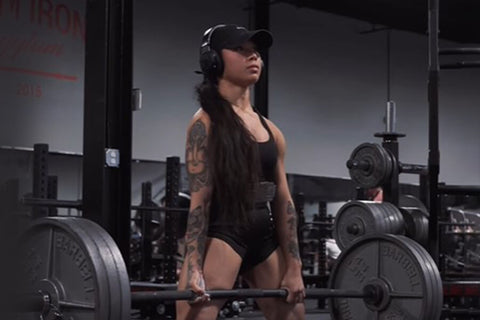
Erika Culanay
Erika Culanay is a certified personal trainer with the International Sports Sciences Association (ISSA). She started working out at an early age, as she was inspired by her older brother’s determination to be physically active. She then started to do push-ups, biking, and hiking, and ultimately loved the sense of relief she was able to get from them.
Having a rough time during her high school years, she was taught that exercising is a healthy outlet, so she began going to the gym with zero knowledge at all. She wanted to build her confidence and have a healthier lifestyle, so she continued to stick around, not realizing that she’d been doing the same routine every single day for years.
Typically, there’s that stereotype of Asians being skinny or thin. At a young age, she was constantly reminded of how she should look, and this made her struggle to free herself from her culture’s opinions. Her biggest battles were more internal, but the will to have a healthy lifestyle, to be in control of her life, and to be supported by people with the same visions and aspirations in life made her overcome these struggles.
Gym is an intimidating place, and sometimes it appears to be discouraging and uncomfortable for many, but if you have that willpower and determination, you can stay on track and will never let anyone or anything keep you away from what you really wanted. “It’ll be a process, but constantly remind yourself of “why” you’re here, validating your hard work, taking pride in it, and being kind to yourself," she added.
“What I would tell women who are starting out on their fitness journey is to find a training plan relevant to their goals, familiarize yourself with how to warm up, make time to research, be in the gym in general, and keep showing up for yourself and never let anyone tell you that you can’t do something.”

Alicia Joy
Alicia Joy is a fitness, mindset, and nutrition content creator from Miami, Florida, USA, who loves the feeling of being strong and independent as a woman. She started going to the gym and doing cardio exercises as a way to stay active after playing sports during her high school years. She then slowly learned to lift weights, which became her biggest passion.
Her biggest obstacle is navigating a space where there are mostly male occupants; she only sees men in the free weight section of the gym. It can be intimidating at times, but she never lets that feeling of intimidation stop her from doing what she loves. Instead, she used the situation to her advantage by asking for help from them, and it surprised her how supportive the male community was.
“If you are a woman and you’re just starting out in the weight room, I would recommend asking for help when you need it, even if it’s from a man.”

Cianah Hee
Cianah Hee is a fitness, travel, and family blogger from Redding, California, who grew up being the only girl in a household of four brothers. She was in high school when she first joined the women's wrestling team. Being part of this team made her realize that health and fitness should always be top priorities.
During those times, she struggled with reconciling the traditionally masculine image of wrestling with her own feminine identity and defining femininity as a high school female wrestler. She pushed herself to be as tough and aggressive as possible, believing that these are what wrestlers are expected to be. She realized that she doesn't have to sacrifice her femininity to be a successful wrestler; she can be strong and powerful while still embracing her own unique identity as a woman.
For women who are just starting out on their fitness journey, not only in weightlifting, she advises prioritizing self-love and self-acceptance above all. During the times when you feel like you're being underrated or intimidated in a male-dominated fitness culture, she stresses staying focused on your goals and what makes you feel good.
“Don’t be too hard on yourself, and celebrate every small victory along the way. Fitness is not just about achieving a certain body type or level of strength. Fitness is about feeling good in your own skin and being healthy in all aspects of your life. Authenticity is also key. Embrace your unique qualities and what makes you feel most confident and empowered. You don’t have to sacrifice your femininity to be a strong and capable athlete.”

Stormi Knight
Stormi Knight is a bodybuilder and a certified neurosequential coach from Covina, California, USA. She focuses not just on maintaining her own health but also on helping others understand that mental and physical health are equally important and helping people build a resilient mind.
A basketball accident, which broke Stormi’s leg, started her fitness journey. She was then a forensic science student and, at the same time, a volunteer and a part-time worker at the VA hospital.
She decided to take a different course and ended up going into biomechanics and kinesiology.
With a mission to help other people and not experience what she had experienced (disappointment in the current healthcare system), she started up boot camps at the athletic and biomechanics programs, where she trained students for free.
The biggest obstacle she ever faced in her fitness journey was dealing with her own health.
She was diagnosed with Hashimoto's and Lupus several years ago, and it scares her when doctors keep on dismissing her and telling her that she was a hopeless case and there was nothing they could do to make her condition better.
Every time she looked at herself, she started going through a spiraling depression because of the pain she was going through and asking how an active athlete suddenly became someone she couldn’t recognize; she could see her ribs and her spine, and none of her clothes would fit anymore. During that time, her boyfriend even needs to pick her up from bed to take a shower because she can’t stand on her own at all.
She lost everything, her work, her clients, and the people she thought were her friends. Even though she felt so frail and hopeless, and people started to leave her side one by one, she decided to take her power back. She started to take good care of herself and her overall well-being because if she gives up, she will never be able to fulfill her mission of helping other people.
Being physically healthy and fit is not an assurance because there are things that we ourselves cannot understand and that even doctors have no answer for. While finding a cure for herself, she was able to meet some awesome friends along the way. Stormi stresses the importance of being surrounded by the right people who are doing immensely better than you and with people and mentors who can really help you achieve your goals.
In her journey, she admitted that she listened to too much advice to the point that it derailed her and prolonged her time achieving her fitness goals.
“The advice I would give to women who are just starting out in the fitness industry in a predominantly male world is to make sure you have an unshakeable mind. Be confident, gain as much knowledge as you can, do as much research as you can, whatever you can do to build that core, that stability, for yourself. Most importantly, build your confidence. Make sure you're confident in every way, but establish core values and morals and don't drop beneath that many, many times.”
What do these women weightlifters tell beginners?
Read the six interviews side by side and the same few pieces of advice keep coming up. None of them is about a secret program. They are about getting started and staying with it.
- Be a learner first. Anna Briggs says the gym is full of people who want to teach and very few who want to learn. Pick reliable sources and keep studying.
- Expect to mess up. Several of the women describe failed lifts and awkward first sessions as part of the process, not a sign to quit.
- Ask for help. Alicia Joy found most people in the free-weight area were glad to help once she asked.
- Learn from other women. Richelle Coberly suggests watching and asking other women in the gym, because there is something different about learning from strong, like-minded women.
- Know your why. Erika Culanay’s advice is to remember why you started, follow a plan that fits your goals and be kind to yourself.
| No. | Point | Detail |
|---|---|---|
| 1 | Be a learner first | Find reliable sources and keep studying the basics. |
| 2 | Expect to mess up | Failed lifts and awkward sessions are part of learning. |
| 3 | Ask for help | Most people in the free-weight area are glad to help. |
| 4 | Learn from other women | Watch and ask strong women in your gym. |
| 5 | Follow a plan | Pick a program that fits your goal and stick with it. |
| 6 | Remember your why | Keep showing up and be kind to yourself. |
How can women start lifting weights with confidence?
The federal Physical Activity Guidelines recommend muscle-strengthening activity at least 2 days a week for adults, alongside 150 to 300 minutes of moderate aerobic activity (ODPHP). In 2020 only about one in five US women met both targets, so there is a lot of room to grow. A simple start looks like this:
- Train 2 or 3 full-body sessions a week built on a squat, a hinge such as a Romanian deadlift, a push and a pull.
- Start light enough to finish every set with good form, then add a little weight or a rep or two each week.
- Write your workouts down so you can see progress.
- Use gear when it helps the lift: flat, stable shoes or lifting shoes for squats, wrist wraps for pressing, lifting straps when grip limits heavy pulls.
For a full plan, see our guides to strength training for women and strength training for women over 40.
| Day | Focus | Details |
|---|---|---|
| Day 1 | Full body A | Goblet squat, push-up, dumbbell row, plank |
| Day 2 | Rest or walk | Easy walk or light cardio |
| Day 3 | Full body B | Romanian deadlift, overhead press, lat pulldown, glute bridge |
| Day 4 | Rest | Recover |
| Day 5 | Full body A | Repeat day 1, add a rep or a little weight |

Nordic Lifting Wrist Wraps, 14"
4.4 (271 reviews)
Our first product and still one of our most popular. A good first wrap for presses and push-ups, with a thumb loop and hook-and-loop.
From $19.58
Shop 14 inch wrist wrapsFrequently asked questions
Who was the first woman to win Olympic weightlifting gold?
Tara Nott of the United States. She won the women’s 48 kg event at the Sydney 2000 Olympics, the first Games with women’s weightlifting.
When did women’s weightlifting become an Olympic sport?
At the Sydney 2000 Olympic Games. Women competed in 7 weight classes, and 85 women from 47 countries took part.
How many women lifted at the Paris 2024 Olympics?
60. The IWF reports that Paris 2024 had 60 male and 60 female weightlifters.
Will lifting weights make women bulky?
Building a lot of muscle takes years of focused training and eating for it. For most women, regular strength training builds strength and shape without a bulky look.
How often should a beginner woman lift weights?
Two or three full-body sessions a week is a good start. The federal guidelines recommend muscle-strengthening activity at least 2 days a week.
Sources
- IWF, 2000: Tara Nott (USA), the first female lifter with Olympic gold
- IWF, 20 years anniversary of female inclusion in weightlifting at the Olympic Games
- CDC NCHS Data Brief No. 443, Physical Activity Among Adults Aged 18 and Over: United States, 2020
- Physical Activity Guidelines for Americans, 2nd edition: Top 10 Things to Know (ODPHP)
Related reading
- Strong women: the women of weightlifting
- The women who changed fitness and health
- Strength training for women
- Lifting gear for women in 2026
CrossFit® is a trademark of its owner. Nordic Lifting is not affiliated with or endorsed by CrossFit.


